Engineers usually begin with a question, not a solver. Why is the flow lower than expected? How much cooling is enough? Which experiment would explain the chemistry? Why did performance change at scale? SIA starts there too, keeping the engineering question at the centre of the workflow.
The question sets the level of detail
A pump operating point may need a system balance and a supplied curve. A thermal sizing problem may begin with an energy balance. A bend with flow separation calls for local fields. A batch chemistry problem needs species balances and kinetics; fermentation adds biological demand and the vessel’s ability to deliver oxygen and remove heat.
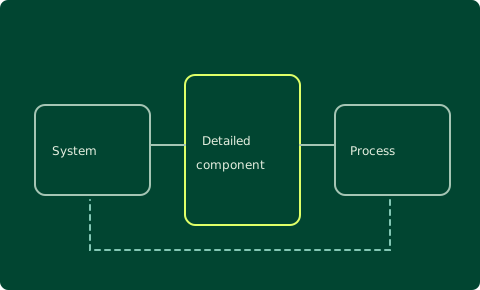
SIA is your autonomous engineering engine: it selects and connects the relevant models around the problem. Geometry, numerical setup and scientific tools become part of one coordinated investigation, rather than separate systems you have to manage.
Start with the information you have
A dimensioned sketch, an operating description, a pump curve or a set of batch measurements can be the beginning. The useful questions are the ones whose answers change the physics or the decision: an unknown passage depth, a fluid state, a heat load or a missing reaction-rate relationship.
You do not need to select a solver, generate a mesh or stitch together scientific software. SIA handles those modelling tasks, states its assumptions and asks for the physical information that materially changes the answer. You stay focused on the equipment, experiment and performance target.
Connect models where the physics connects
A long pipe and its critical bend need not have identical numerical detail. A reactor and its cooling jacket cannot be understood as unrelated calculations. A fermentation model should connect the cells’ demand with mixing, oxygen delivery and heat removal.
Hybrid modelling puts detail where it can change the answer. The interfaces still matter: flow, pressure, energy and species must retain the same physical meaning as information moves between models.
Build an experimental learning loop
The most useful result may be a design comparison—or a better next experiment. Chemistry data can help distinguish reaction mechanisms or estimate kinetic behaviour. Fermentation measurements can test whether biology or transport explains the performance gap. Each targeted experiment then strengthens the next investigation.
Repeated studies also create opportunities for data-driven models. Within a well-supported range, a surrogate can help explore alternatives quickly, while a new regime or uncertain prediction calls for the relevant physics again.
Deliver the decision and the reasoning
The result connects what was found to what you should do next: compare a design, adjust an operating condition or run a targeted experiment. Inspect the fields, balances, sensitivity checks and assumptions when you need the detail, with the engineering conclusion presented first.
Your advantage
Spend your effort on better designs, stronger experiments and improved processes. SIA brings the models and scientific tools together around the decision.