A pump and its piping form one system. Replacing a pump without understanding the system curve can move the problem rather than solve it. The useful starting point is the required flow, the available head and where the losses occur.
Simple to use · Autonomous engineering engine
Your problem. One connected workflow.
Describe the flow shortfall and share your pump curve and piping information. SIA connects the system balance and relevant flow models so you can compare interventions without assembling the calculation tools yourself.
Start in plain language. Add the drawings or data you have. SIA handles model selection and tool orchestration, asking for the physical inputs that materially affect the answer.
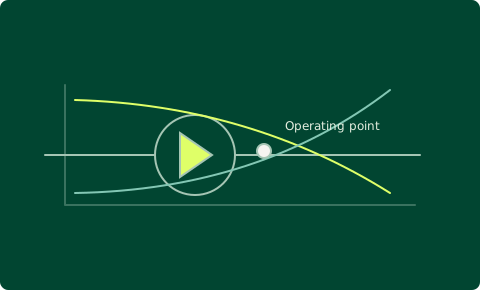
From your question to the decision
Establish the operating point
Build the system head requirement and find its intersection with the supplied pump curve. Separate static head, distributed friction and local losses so the constraint is visible.
Investigate the expensive section
Use engineering correlations for ordinary developed pipe runs. Resolve a troublesome bend, expansion or passage with CFD when its local flow pattern changes the answer.
Compare changes on one basis
Compare pipe diameter, routing and pump options against the same required duty. Show flow, head and hydraulic power together; calculate shaft power when efficiency is known.
What changes the decision
The decision is about the whole system. More installed power is only one of the possible answers.