A vessel-average measurement can hide the conditions cells encounter as they circulate. Feed, oxygen supply and cooling interact with changing biomass demand. Scale-up is therefore a connected biological and equipment question, rather than a simple multiplication of working volume.
Simple to use · Autonomous engineering engine
Your problem. One connected workflow.
Bring the batch data, vessel information and scale-up target. SIA connects the biological and engineering questions in one investigation so you can focus on feed, aeration, mixing and cooling decisions.
Start in plain language. Add the drawings or data you have. SIA handles model selection and tool orchestration, asking for the physical inputs that materially affect the answer.
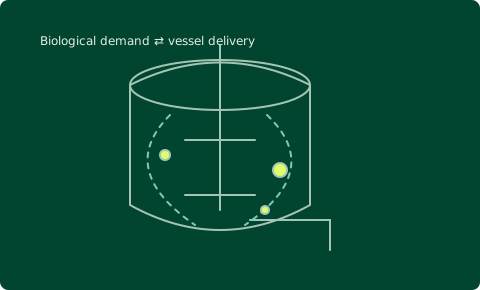
From your question to the decision
Establish what the biology needs
Start with growth, substrate uptake, product formation and oxygen-demand balances. Use batch data to identify which parameters and relationships are supported by the measurements.
Understand what the vessel delivers
Compare demand with oxygen transfer and cooling capacity. Add spatial mixing and transport where local gradients or circulation times could explain behaviour that a well-mixed model misses.
Design the next scale-up move
Compare feed, aeration, agitation and cooling strategies as connected changes. Select measurements or trials that separate biological limitations from equipment limitations, then update the model with the results.
What changes the decision
Preserve the biological and transport conditions that support performance as vessel size, feed demand and cooling requirements change.