Reaction rate and temperature influence each other. A jacket also has its own thermal response: it is not automatically an infinite reservoir at a fixed temperature. Connecting these effects makes batch and scale-up questions more useful than a conversion curve alone.
Simple to use · Autonomous engineering engine
Your problem. One connected workflow.
Describe the batch, reaction information and cooling arrangement. SIA connects kinetics and energy balances so you can investigate conversion and cooling demand in the same workflow.
Start in plain language. Add the drawings or data you have. SIA handles model selection and tool orchestration, asking for the physical inputs that materially affect the answer.
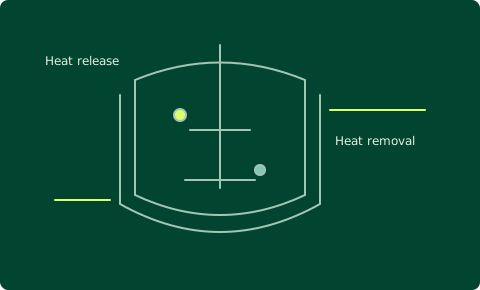
From your question to the decision
Build the reacting energy balance
Combine species balances with the thermal model. Follow composition and temperature together instead of prescribing a temperature that the equipment may not maintain.
Represent the cooling system
Account for the stated jacket capacity, coolant flow and heat-transfer assumptions. Examine how the cooling response changes the batch trajectory and required duty.
Move to local physics when it matters
A well-mixed model is a useful starting point. If mixing, spatial temperature gradients or transport limit the decision, the investigation needs the relevant coupled spatial model and supporting measurements.
What changes the decision
Treat chemistry and equipment as one engineering problem. The cooling strategy must respond to the reaction’s changing demand.