A plant contains long, relatively predictable sections and small regions where geometry or coupled physics dominates. Treating every section at the same fidelity can waste effort. Treating the critical region in isolation can miss how the rest of the system sets its operating conditions.
Simple to use · Autonomous engineering engine
Your problem. One connected workflow.
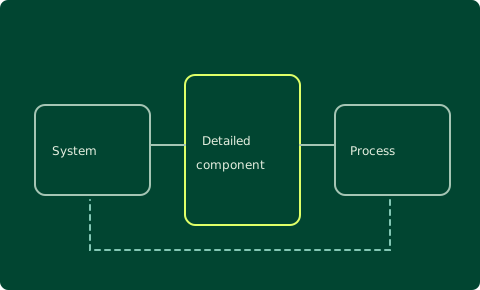
Describe the system and its limiting component. SIA coordinates the modelling tools and connects their results so you can investigate the bottleneck while keeping the wider operating conditions in view.
Start in plain language. Add the drawings or data you have. SIA handles model selection and tool orchestration, asking for the physical inputs that materially affect the answer.
From your question to the decision
Allocate the right model to each region
Use analytical or reduced models for well-understood sections and CFD where local geometry matters. For process scale-up, connect demand from kinetics with the heat and transport the equipment must deliver.
Make the interfaces agree
Track physical coverage, flow, pressure references and energy across model boundaries. A component must not be counted twice, omitted, or driven by conditions inconsistent with the system.
Reuse what the investigation learns
Retain the original baseline, compare meaningful alternatives and build a reusable body of verified results. Surrogate models can accelerate repeated questions within the region those results support.
What changes the decision
Get one connected investigation, with system, component and process models working together to inform the decision.